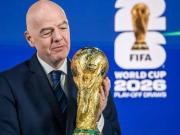
According to the latest report from The Times, although the FFE plan has brought Gianni Infantino's credibility to an all-time low, he is still expected to be re-elected as FIFA president.
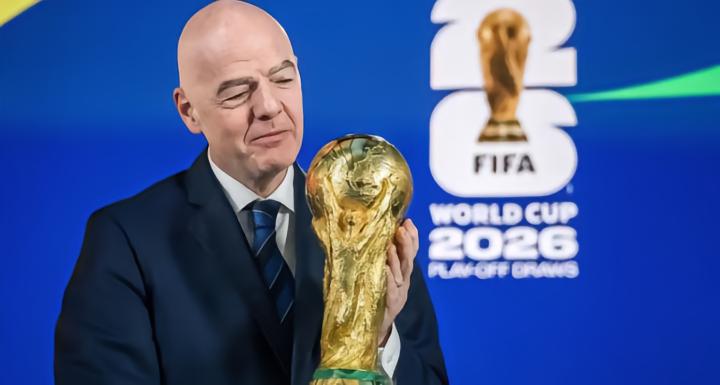
According to reports, several key industry insiders pointed out that the football associations of European countries such as Spain, France, and Italy, who also hold significant influence over Infantino's attempt to sell his World Cup stake, have consistently chosen to remain silent and observe.
A source at the heart of the industry said: "Once a precedent is set by Trump interfering in Balogun's punishment, the situation will slide into a dangerous abyss. The vast majority of football associations choose to remain silent, which is tantamount to opening the door to external political interference. Only when a crisis breaks out will all parties reveal their true attitudes and see that all interactions in the football world are filled with exchanges of interests."
There are also industry rumors that the English Football Association's ambitions go beyond bidding for the 2035 Women's World Cup. They are seeking to independently host the Men's World Cup in 2038 or 2042. UEFA has already publicly discussed this plan, and maintaining a close relationship with Gianni Infantino is a key factor in the successful implementation of the bid.
Regardless of the power struggles among the parties involved, these intricate web of interests precisely explain why Infantino will not step down. Although his credibility has plummeted to a critical point this week, it is almost certain that he will be re-elected as FIFA president next year. He will most likely be elected unanimously, with no one daring to challenge him.
Despite the public outrage over Trump's interference in refereeing decisions, and UEFA's threat to boycott the World Cup following the privatization and financing FFE scheme, no football association dared to formally nominate a rival to challenge his position.
Industry insiders frankly admitted that the football associations of Spain, France, and Germany are not without the power to counterbalance FIFA, but they are unwilling to openly break ties. Even with UEFA's public and tough stance, the member associations each have their own calculations: many African and Asian football associations have long relied on development funds from FIFA, and Infantino's promise that each association would receive $40 million after the FFE plan was implemented has firmly bound the position of the vast majority of small and medium-sized football associations.
The Balogun red card suspension case set an unprecedented precedent in football history: Trump directly pressured Infantino, and FIFA made an exception and suspended the player's suspension, allowing the host country's star striker to play in the knockout stage. This completely broke the bottom line of neutrality in football discipline, and UEFA President Ceferin directly boycotted the World Cup final to express his protest.
However, Infantino has cultivated a strong network of power in football for over a decade and has already built a solid alliance of interests. Since taking office in 2016, he has been re-elected as FIFA president twice without any competitors, and now he has announced his candidacy for the 2027 election. The FIFA statutes originally stipulated that the president could serve a maximum of three terms, totaling 12 years, but his team is pushing to amend the statutes in order to secure a longer term for himself.
He wields immense resources: an annual salary of £6 million, direct access to heads of state from around the world—he has close personal relationships with dignitaries such as Trump, the Saudi Crown Prince, and Putin; he travels using a private jet provided by the Qatari royal family, and stays in castle-like luxury hotels when attending industry summits, showcasing his "imperial" status in the football world.
Many former FIFA executives criticized Infantino for building a highly centralized management system during his tenure: rules could be flexibly changed, dissenting voices were marginalized, and all major decisions were made behind closed doors, bypassing the FIFA Council and the continental football federations. The FFE World Cup privatization plan is a typical example. The plan was implemented without consultation with UEFA, AFC, and other continental football federations, and was almost forced to be implemented, but was eventually withdrawn due to a collective boycott from European football.
Even though the FFE proposal was declared invalid, Infantino's power base remained unshaken. The Confederation of African Football and most Asian Football Confederations publicly expressed their support for him. These associations are heavily reliant on FIFA's financial subsidies and are unwilling to lose their financial support. While Western football associations such as the English Football Association and the Spanish Football Federation are dissatisfied, they will not take extreme measures to completely break with FIFA due to their future World Cup bidding rights.
Several industry executives predict that the 2027 FIFA Congress in Rabat will not see a coup attempt, but will simply proceed with the formalities to complete Infantino's re-election. Unless UEFA, together with the AFC and CONCACAF, comes up with a unified and strong sanctions plan, no one will be able to shake his dominant position in FIFA in the short term.