Recently, Götze gave an exclusive interview to Bild, discussing his plans for a two-year contract extension with Eintracht Frankfurt, commenting on former coach Riera who has been sacked, as well as the German national team and Klopp.
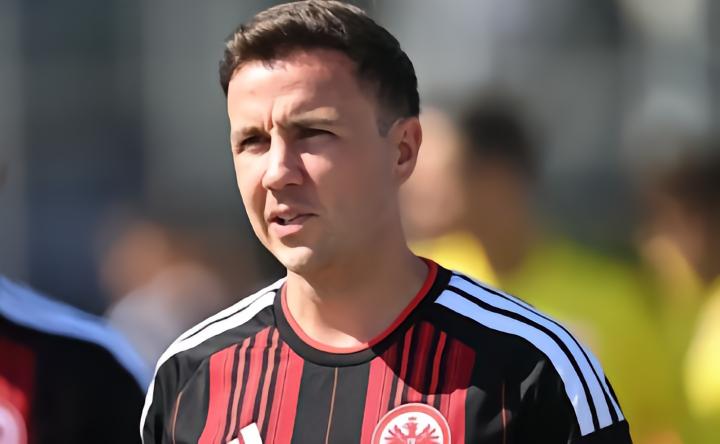
In April of this year, you extended your contract with Eintracht Frankfurt until 2028. What can fans expect from you?
After careful consideration, my family and I have decided to stay in Frankfurt. I enjoy life here. I'm 34 years old now and know I need more recovery time than before. But my goal remains clear: to continue helping the club and team both on and off the pitch, with my experience and undiminished passion.
Many people originally thought you would only renew your contract for another year...
I've always liked to look at things from a long-term perspective. We both understood each other's value, and during the negotiations, we clearly discussed what I could bring to the team and what the club could offer me.
The new head coach, Hütter, called you immediately after taking office. Is this an important signal for you?
Yes, absolutely. It was a great exchange. From his training methods, his way of speaking, and his interactions with others—not just the team—you could sense his immense ability.
What impressed you the most?
His thinking is incredibly clear. The way he talks about things, and how he achieves great results with very few words, is truly impressive. I must say, it's an exceptional ability.
Communication doesn't seem to be one of former head coach Riera's strengths. Were those four months the craziest period of your career?
It was certainly a very special period. Those four months were extremely difficult. Many things didn't go as planned—not for me personally, the club, or the entire team. But that's in the past now, and I don't want to dwell on it further. Ultimately, football is a results-oriented sport. Since we weren't successful, the club made swift and decisive adjustments. However, I don't think it's appropriate to place all the blame on one person; everyone should reflect on their performance. Only in this way can we improve.
After his dismissal, he made some remarks, the gist of which was, "Just because someone is a World Cup champion doesn't mean they can do whatever they want." Does that make you angry?
I believe I've had a good relationship with every head coach in my career. If he feels the need to say that, let him say it. However, let's call this—it's quite interesting. It seems to imply that we communicate frequently and know each other well, but that's not the case. If that's his interpretation, then so be it. (laughs)
Was last season just a mistake?
I know I could have done much better. We've looked back on that season and moved on. Now the most important thing is to look forward and play better this season. Looking back over the past four years, it was undoubtedly the worst year for me personally and for the team.
You've achieved almost everything; you're now a father and a successful investor. What's driving you now?
I've always had an inner drive to constantly prove myself. From a young age, I've enjoyed challenges and pushing myself. Of course, knowing my career won't last another ten years makes it all the more special. But even at this stage of my career, I still want to explore my potential and continue to improve myself.
Are you the type of person who enjoys the achievements you've already made, or do you immediately look for the next goal?
I feel I've changed over the years. Before, I chased grand goals, like winning the Bundesliga title and various trophies. Now, I find joy in smaller things, like completing a high-quality training session or putting on a few good performances in a match. I'm more willing to focus on these things rather than constantly thinking about what I need to achieve a year from now. This change has been very noticeable over the past 15 years. Compared to ten years ago, I now enjoy these small successes much more.
Many professional athletes experience a slump after retirement. Can one prepare for that moment in advance?
I don't think anyone can completely avoid this situation. Musicians, actors, or people in other professions are no exception. Football has been a part of my life for over 20 years, and when it suddenly ends, everything changes. However, firstly, I'm still playing football. Secondly, I've built a very solid foundation that I can rely on—most importantly, my family, as well as my company, startups, and investments.
Are you afraid of life after retirement?
I wouldn't say I'm afraid, but rather filled with awe. There's always been a very clear rhythm: season, training, matches. The future will be even more in my own hands. I know I need time to adjust. Life will definitely change, but I will never be bored. To reiterate: I am still a football player, and I will continue to play for some time.
Your World Cup-winning teammates Mats Hummels and Thomas Müller have both recently received positive feedback as television commentators. Would you consider this path?
I don't think I'm suited for this role. Maybe I'll occasionally participate in special events, like the World Cup. But overall, this isn't something I want to do long-term. I'm more interested in topics related to football, finance, and the economics of sports.
How would you rate the German team's performance in the World Cup?
I think the team's ability to step up in crucial moments has somewhat diminished. Looking back at 2014, we didn't have an easy time in every game, but we always managed to step up in key situations. Ultimately, as long as we advance, that's enough. That's what we did back then.
Now that your old acquaintance Jürgen Klopp has become the German national team coach, many people feel that "everything will get better."
Yes, he is indeed a very good communicator. He knows how to motivate people both inside and outside the team, igniting their passion, which is a huge help to a team. Of course, this doesn't guarantee success, but he excels at things like high-quality training, setting the team on the spot, winning games, and building a truly cohesive team.
In 2009, it was Klopp who gave you your professional debut at Borussia Dortmund. As a young player, what did he give you that no other coach could provide?
If I could only choose one thing, it would be that he knew how to get along with me. I was 18 years old then, just starting out in the professional team. He had that understanding and wisdom, knowing exactly what I needed at that stage. On the one hand, he was very demanding of me; on the other hand, he would also let me sit in the stands at times to keep me grounded. This balance was perfect for me at the time. He knew, "This is a very talented player, but we mustn't push him too high too early." He handled it exceptionally well. I benefited from it, he benefited, and the team ultimately benefited as well. He was truly outstanding in managing players; he almost perfected it.
Is there a moment that you still remember vividly?
I will never forget the intensity of his training. He had extremely high demands on the players' physical and mental well-being. I remember some training camps had three training sessions a day. But after training, he would give everyone two or three days off, and then demand that we return to our highest level. This balance was excellent. Even if we had just won 4-0 on Saturday, if anyone wasn't running actively enough during Tuesday's training, he would immediately stand up and remind everyone.