FIFA President Gianni Infantino had hoped for an uncontested re-election next year, but the recent failure to sell FIFA's commercial rights and public opposition from several football federations have made the prospects for the March election uncertain.
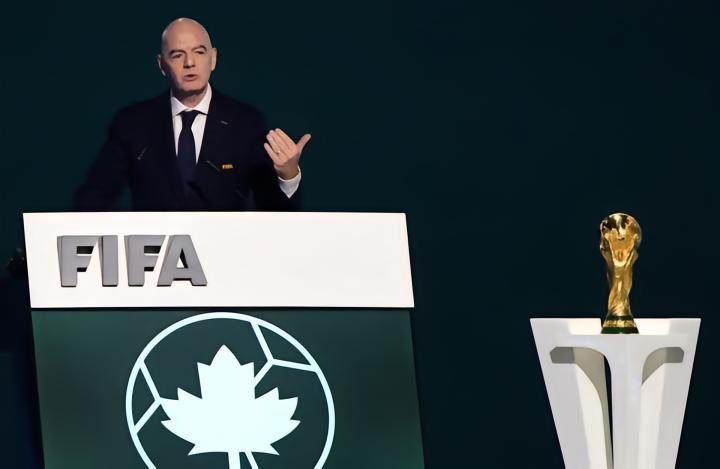
Gianni Infantino confirmed his continued commitment in his closing remarks at the 2026 FIFA Congress in Vancouver. Those present at the time expected him to complete his third and final full term unchallenged, until 2031. In a social media post in April, he wrote: "The journey continues!"
But the situation has changed. The failed attempt to sell a 21% stake in FIFA's commercial and event operations has shaken Infantino's foundations in the past week. UEFA and other organizations have publicly expressed a loss of confidence in his leadership, and allies and advisors are leaving one after another.
The FIFA presidential election, scheduled for March 17 next year, has suddenly become fraught with uncertainty.
The change of president at FIFA is rare. Since French journalist Robert Guérin became the first president in 1904, only nine people have held the position. Gianni Infantino is the third since the 1970s, after João Havelange and Sepp Blatter, who together held the presidency for over 40 years. It was Blatter's resignation due to corruption allegations that prompted FIFA to cap the presidential term at 12 years in 2016. That same year, former UEFA General Secretary Infantino took office with an ambitious plan. By advocating that his initial three-year term not count towards the 12-year limit, he secured the opportunity to serve a total of 15 years if re-elected the following spring.
FIFA holds elections every four years, at its Congress following the Men's World Cup. In the 2019 and 2023 elections, Gianni Infantino was re-elected by acclamation without a vote, as no challengers were present. The last election with a substantive vote was in 2016, when Infantino defeated four opponents at a special Congress in Zurich—Prince Ali bin Hussein, Salman bin Ibrahim Al Khalifa, Jérôme Champagne, and Tonkin-Sexvale—in the second round of voting. Salman is currently a FIFA Vice President and a member of the Council.
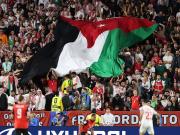
The FIFA presidential election process actually lasts a year, from one congress to the next. Potential candidates must have "played an active role in association football" for at least two of the previous five years and pass a FIFA committee's eligibility review. Most importantly, they need to secure declarations of support from at least five member associations by the November 18th deadline. Each association can only support one candidate – a detail significant given the recent symbolic withdrawal of support for Infantino by associations such as Wales and England. Earlier this year, Infantino claimed to have secured re-election commitments from 200 of the 211 member associations.
Gaining the support of five associations is the minimum requirement for candidacy, but more is needed to dethrone Infantino. FIFA statutes stipulate that a simple majority (over 50%), or 106 votes, is required for a two-candidate race. All associations have equal voting weight: the Spanish Football Federation and the Seychelles Football Federation have equal power, as do the Argentine Football Federation and the Aruba Football Federation. Catering to the needs of smaller nations has been a strategy for Infantino to consolidate his popularity, but opposition from three associations presents new challenges. UEFA (55 votes) has declared its opposition to Infantino, and the Asian Football Confederation (46 votes) and CONCACAF (35 votes) have also criticized his abandoned plans. These three associations' votes are enough to overthrow Infantino, but not all member associations will vote according to the associations' wishes; for example, the Qatar Football Association expressed its "full support" for Infantino in the last 72 hours.
Presidential elections typically garner votes by securing support within football federations, but the voting is conducted in secrecy, with no collective voting. Salman received public support from the AFC and non-FA federations in 2016 (theoretically over 100 associations), but ultimately failed to reach 88 votes. If there are more than two candidates, a two-thirds majority is required in the first round, followed by rounds of elimination until only two remain. Infantino won in 2016 with 115 votes after two rounds.
Potential challengers have 16 weeks to garner support. According to The TA, CONCACAF president Victor Montagliani is seriously considering launching his first challenge to Infantino in over a decade.
The Congress in April 2026 officially announced that the presidential election for 2027 would be held in Morocco on March 18th, with the winner leading FIFA to the 2030 Centennial World Cup (spanning six countries and three continents). Holding the election in Morocco is considered significant, as the country intends to host the 2030 World Cup final, a sentiment shared by co-hosts and defending champions Spain. Adding to Infantino's advantage is his historically strong support from the Confederation of African Football (CAF). FIFA previously chose Kigali, the capital of Rwanda, to host the 2023 election, where he won by applause.
However, the election plan faces threats. An emergency meeting of the FIFA Council could be convened if one of two scenarios occurs: either a majority of the Council's 37 members are disillusioned with Infantino's leadership, or one-fifth (approximately 42) of the member associations request an emergency congress. UEFA alone could reach that number, potentially triggering a vote of no confidence in the FIFA president. Ten years ago, it was an emergency congress that propelled Infantino to power; could another emergency congress now bring him down?
The coming days and weeks will foreshadow the direction of this controversy, but the next FIFA election will no longer offer the same guarantees for Infantino.